
How to Use Lighting to Tell a Story in Interior 3D Renders | A Guide for Architects & Designers
Introduction: Why "Being Bright" Is Not the Same as "Being Compelling"
Let’s be honest. You’ve seen plenty of interior renders that are technically bright. Every corner is visible. Nothing is too dark. And yet… the image feels flat.
Lighting is not about visibility. It‘s about emotion, focus, and narrative.
For architects and interior designers, a 3D render is often the first time a client sees a space that doesn’t yet exist. If that image doesn’t make them feel something—curiosity, calm, excitement, or the urge to sit down in that chair—then the render has failed, no matter how accurate the model is.
This guide walks through how professional visualization studios use lighting to shift a render from “technically correct” to “emotionally irresistible.”
1. Natural Light: Setting the Time, Place, and Mood
Natural light is the most powerful storytelling tool you have. It tells the viewer what time it is, what season it might be, and how the space feels at that moment.
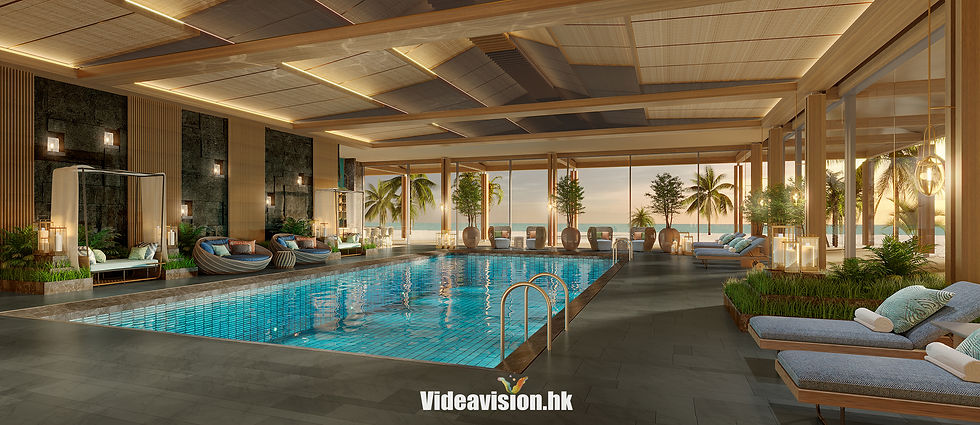
Golden hour (sunrise / sunset) creates long, soft shadows and warm tones—perfect for hotel lounges, residential living rooms, or boutique retail spaces. It says: slow down, stay a while.
Morning light (cooler, directional) works beautifully for breakfast nooks, home offices, or spa bathrooms. It feels fresh, productive, and clean.
Midday light (high contrast, sharp shadows) adds drama. It works well for minimalist galleries, modern courtyards, or any space where you want architectural lines to take center stage.
Cloudy / overcast light (soft, diffuse) is ideal for medical offices, dental clinics, or any space where even illumination matters more than drama.
✅ Key takeaway: Don‘t just turn on the sun. Choose the time of day like a cinematographer would. Your shadow placement is just as important as your light source.

2. Artificial Light: Layering for Depth and Intimacy
One of the most common mistakes in 3D rendering is relying on a single ambient light source. In the real world, no room is lit by one invisible bulb.
Great interior renders use layered lighting, just like great interior designers do:
Layer | Purpose | Example |
Ambient | Base illumination | Recessed ceiling lights, cove lighting |
Task | Focused function | Pendant over dining table, under-cabinet kitchen light |
Accent | Drama and highlight | Wall washer, picture light, floor lamp on a reading chair |
Temperature creates tension (in a good way).
Warm light (2700K–3000K) feels inviting. It makes wood look richer, leather look softer, and velvet look deeper. Use it in living rooms, bedrooms, and lounges.
Cool light (4000K–5000K) feels crisp and professional. It works for offices, medical spaces, and modern kitchens.
In larger open-plan spaces, don‘t be afraid to mix temperatures. A warm pendant over the dining table and cooler track lighting near the kitchen island naturally define zones without a single wall.
✅ Key takeaway: Ambient light fills the room. Accent light tells the story. If you only have ambient light, you only have half a story.

3. Atmospheric Light: The Light You Almost Don’t Notice
Some of the most memorable lighting in a render is the light that‘s not trying to illuminate everything.
The “unfinished” corner. A single floor lamp glowing in a corner, leaving the surrounding wall in soft shadow. This creates mystery. It suggests there’s more to explore. It makes the space feel larger than what you can see.
The functional cue. Light tells the viewer what a space is for.
A pendant light hanging low over a dining table? Someone is about to eat there.
Sconces flanking a hallway mirror? This is a preparation zone—a place to pause and check yourself before leaving.
A desk lamp on a small table by the window? That’s a reading nook, even if no books are visible.
The spill light. Light that softly “spills” from one room into another (through a doorway or arched opening) creates depth and suggests a larger world beyond the frame.
✅ Key takeaway: Not every light needs to light everything. The most powerful light is often the one that leaves something to the imagination.

4. A Commercial Note: Why This Matters for Your Project
You might be reading this as an architect or designer thinking: This is beautiful, but will my client care?
Yes. And here’s why.
A render with flat, boring lighting communicates one thing: this space is still unproven. A render with cinematic, narrative lighting communicates another: this space already feels real.
When your client sees warm evening light falling across a sofa, they don‘t think about the 3D model. They think about sitting there after work with a glass of wine. That’s the difference between a render that gets approved and a render that gets built.
For visualization studios, lighting is not a checkbox. It‘s the primary tool for translating architectural drawings into desire.
And that’s exactly what we do.

Final Thoughts: Light Is Your Storyteller
You can model every detail perfectly. You can choose the right furniture, the right materials, the right camera angle. But without intentional lighting, the image will never breathe.
Natural light sets the scene.
Artificial light builds depth.
Atmospheric light creates wonder.
Material interaction delivers texture and truth.
Next time you open your rendering software, don‘t ask “Is this bright enough?” Ask “What story is this light telling?”
If the answer isn’t clear, start moving your lights.
Looking to bring your next interior project to life with cinematic, narrative-driven 3D renders? We specialize in helping architects and designers win clients and approvals through visualization that feels real — because the light is never an afterthought.


Comments